
Winterbourne Downs RSPB (22 September 2026)
On a beautifully warm and sunny day 14 of us arrived at the RSPB Winterbourne Downs car park for a morning’s birding in the unique rolling chalk grassland – 80% of which has been lost over the years and pockets of which can still be found in southern England, especially Salisbury Plain. Winterbourne is a working farm managing the wildflower and insect rich habitat for a variety of threatened species and provides a safe haven for both breeding and migrating birds.
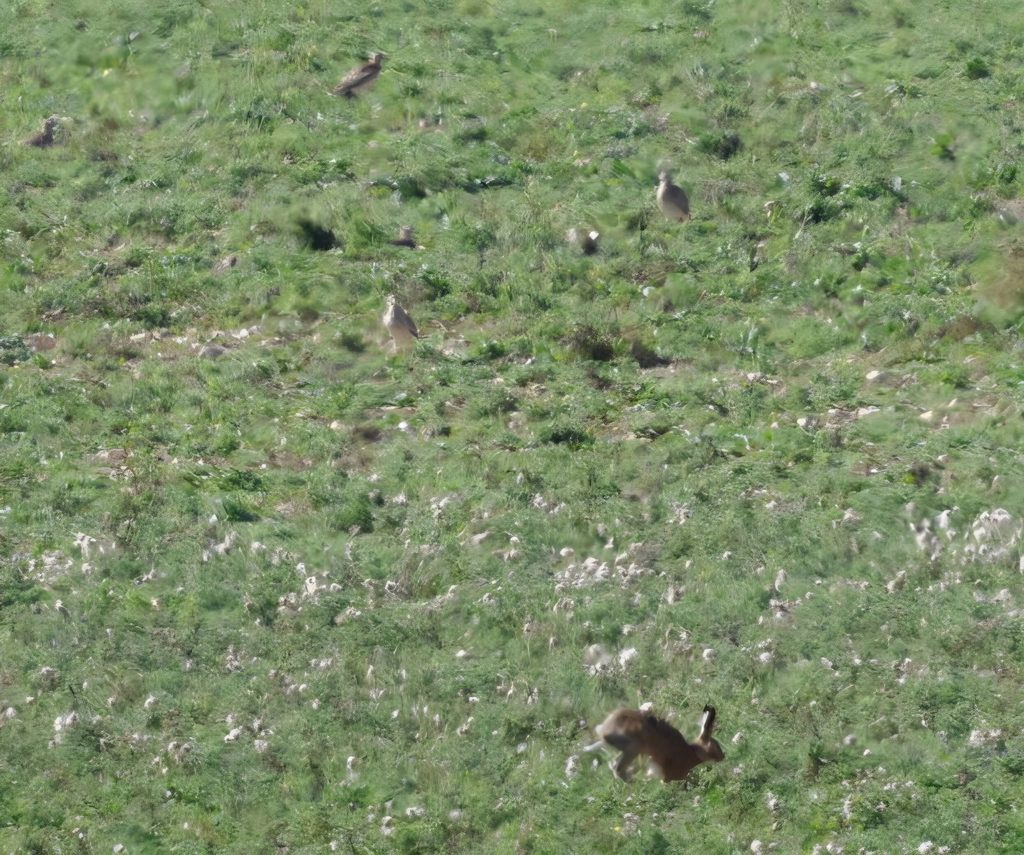
Soon after we assembled at the reserve, we heard the strange wailing call of the rare and endangered Stone Curlew. Gaps in the hedgerow allowed us telescope views across the fields of a number of these birds, however as we moved to the screens created by the RSPB we were astonished to see how many were actually there. Well over 40 had assembled on the stony grassland kept manicured by the local rabbits making it an ideal habitat for a pre migration stopover. Despite the heat haze it was one of the most astonishing wildlife sights and the part played by the rabbits in the creation of this closely cropped grassland cannot be underestimated.
We then moved quietly around the reserve encountering a mouthwatering variety of birds – Blackcap, Chiffchaffs, Linnets, Skylark, Goldcrest, House Martin, Swallow, Lapwing, Meadow Pipit, Stonechat, several Sparrowhawks, Buzzard, Red Kite, Raven and Rook along with several sizeable Tit flocks. It had been a wonderful morning and we looked forward to our afternoon at Blashford.
Blashford Lakes HIWWT
We arrived at the visitors’ centre at Blashford and following lunch made our way to the lakeside hides through the woodland. On a warm afternoon the birds were rather quiet- mainly Tit flocks, Treecreeper, Nuthatch, Goldcrest, Firecrest, Chaffinch, Great Spotted and Green Woodpeckers. From the lakeside hides we were able to see Kingfisher, Great and Little Egrets, Lapwing, Peregrine, Buzzard, Red Kite, Shoveler, Gadwall, Greylag Goose and Raven.
Once again, it had been a superb day’s birding and the weather had been kind to us, however it was time to make the journey back to London, having witnessed the amazing gathering of Stone Curlews at Winterbourne Downs RSPB; an unforgettable sight!
Many thanks are due to Rebecca for the smooth organising of the day and transport, Julia for keeping the species list and to our selfless car drivers who make these trips possible.
Species Lists.
Winterbourne Downs
Blackbird, Blackcap, Blue Tit, Buzzard, Carrion Crow, Chaffinch, Chiffchaff, Goldcrest, Goldfinch, Great Tit, Blue Tit, Grey Heron, Herring Gull, House Martin, Jackdaw, Jay, Kestrel, Lapwing, Linnet, Long Tailed Tit, Magpie, Meadow Pipit, Nuthatch, Pheasant, Raven, Red Kite, Robin, Rook, Skylark, Sparrowhawk, Stock Dove, Stone Curlew, Stonechat, Swallow, Wood Pigeon. Total: 36
Others: Brown Hare, Common Rabbit
Butterflies: Clouded Yellow, Red Admiral
Blashford Lakes
Black Headed Gull, BlueTit, Carrion Crow, Chaffinch, Chiffchaff, Coal Tit, Coot, Cormorant, Egyptian Goose, Firecrest, Gadwall, Great Crested Grebe, Great Tit, Great Egret, Green Woodpecker, Grey Heron, Greylag Goose, Herring Gull, House Martin, Jackdaw, Kingfisher, Lapwing, Lesser Black Backed Gull, Little Egret, Little Grebe, Long Tailed Tit, Mallard, Moorhen, Mute Swan, Nuthatch, Peregrine, Pied Wagtail, Red Kite, Robin, Shoveler, Treecreeper, Tufted Duck. Total: 37
Butterflies: Red Admiral, Speckled Wood.
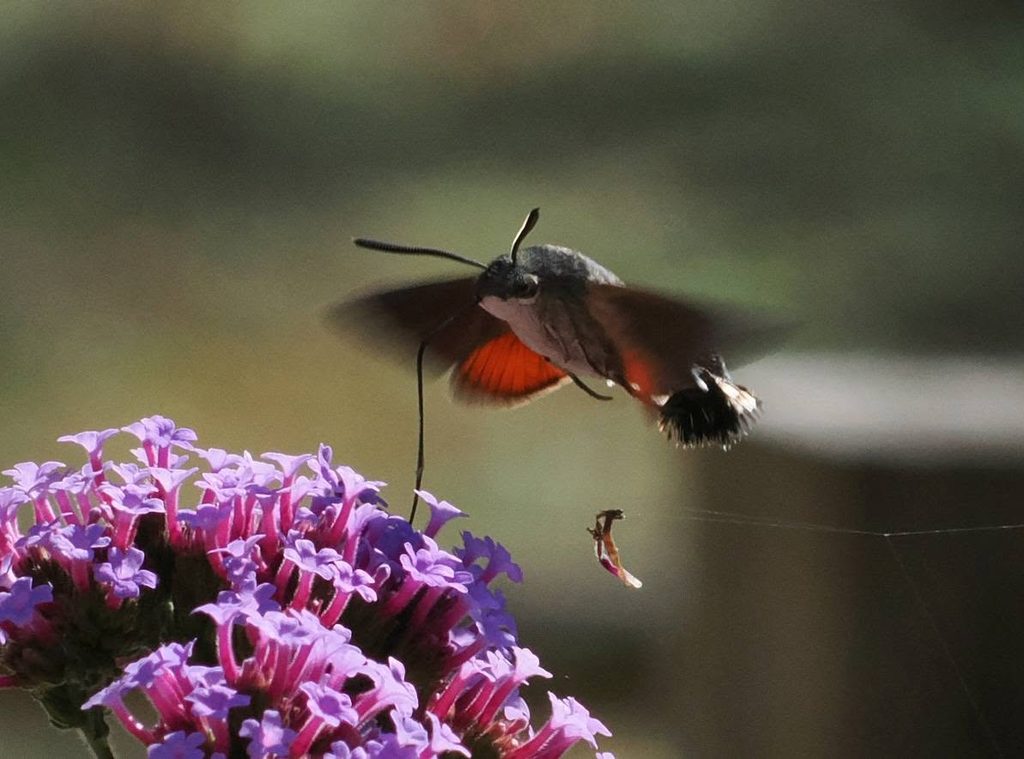
Hummingbird Hawk Moth