
Splash Point and Seaford Head (20 June)
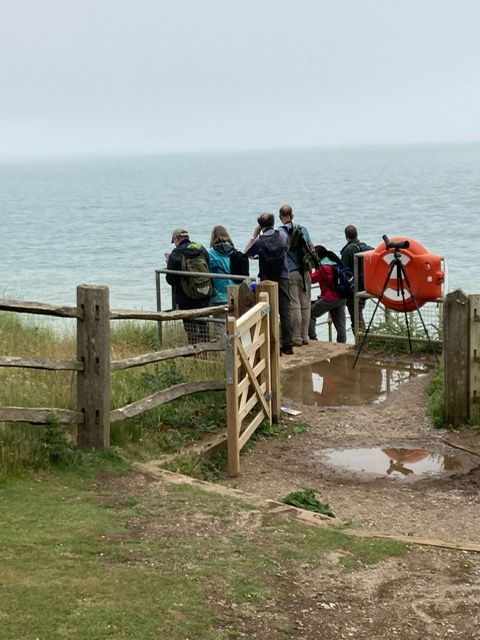
An unpromising start with heavy rain causing all sorts of problems on the roads quickly evaporated into a lovely day at the seaside. 14 members enjoyed the Kittiwake colony on the cliffs at Splash Point and then drove up to South Hill Barn on Seaford Head to walk down Hope Bottom and along the cliffs to Cuckmere Haven. We stopped for lunch at Hope Gap surrounded by Rock Pipits, Meadow Pipits, Skylarks, Stonechats and Linnets and the chalk downland flowers and the butterflies and invertebrates that this habitat supports. They were all enjoying this warm sheltered spot, as we were. The Seven Sisters opposite were shrouded in sea mist but later emerged to reveal a very distant Peregrine. There’s nearly always one to be found somewhere on the cliffs between Cuckmere and the Birling Gap. Later one shot over South Barn car park as we were preparing to go back to Splash Point for another look – in the sunshine this time! Sandra spotted a Guillemot amongst the gulls on the sea, I saw some Sandwich Terns and then Fiona trumped us with 3 Bottle-Nosed Dolphins!
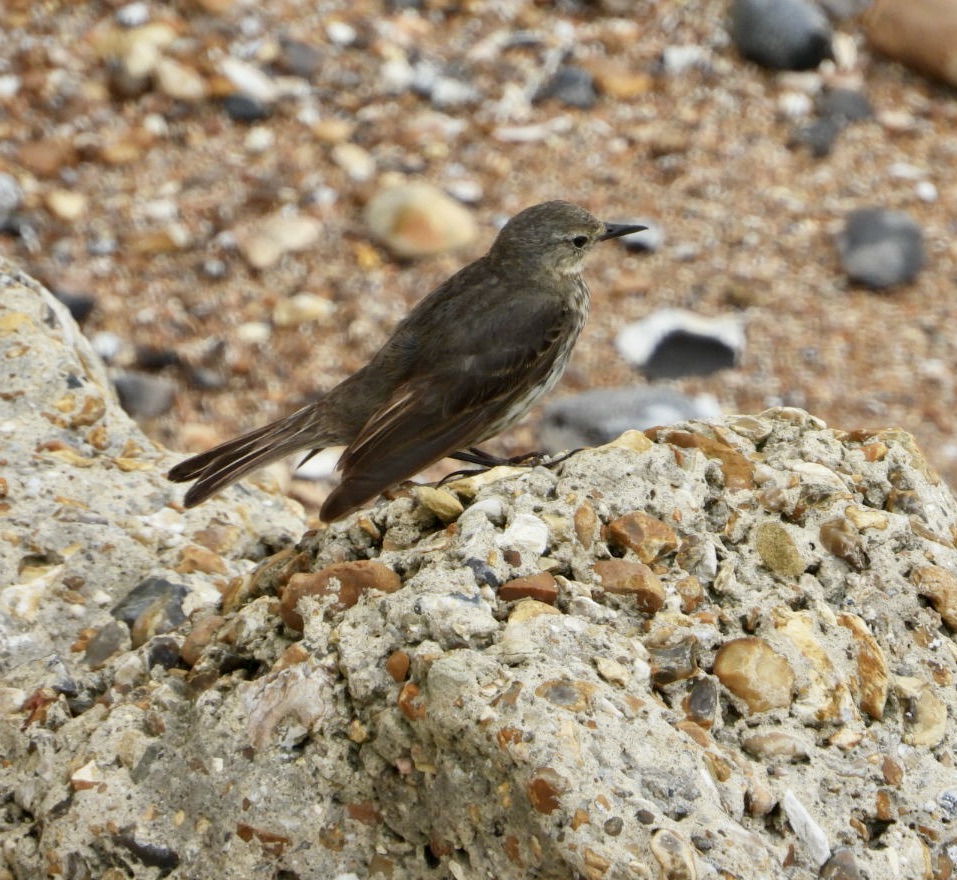
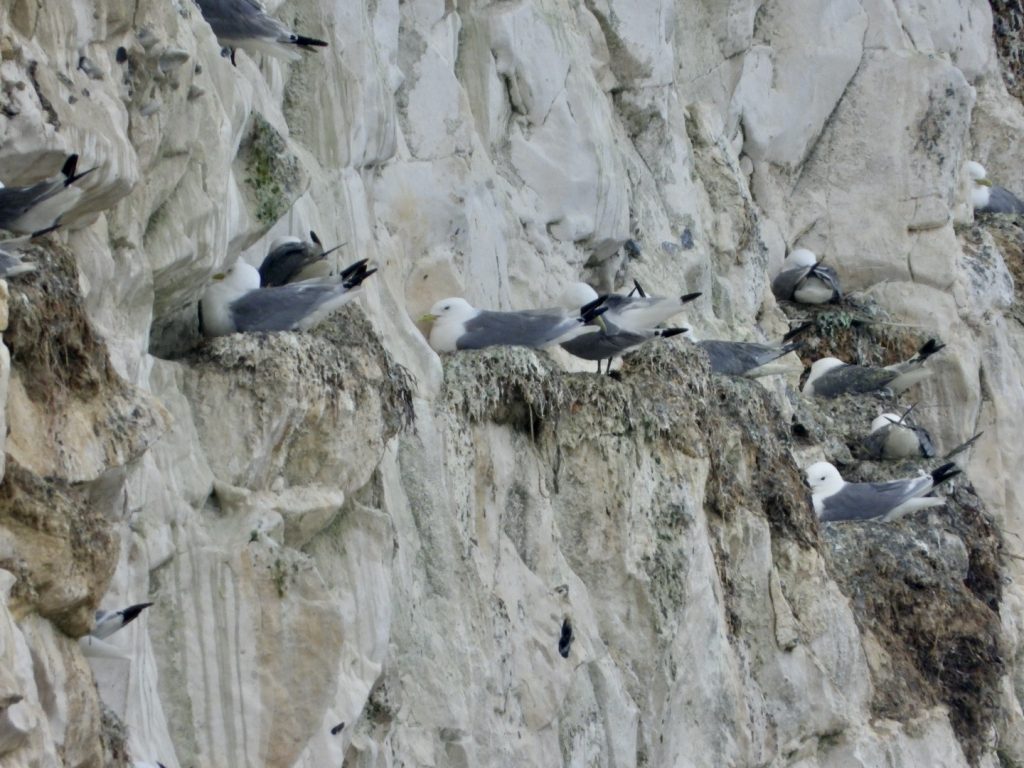
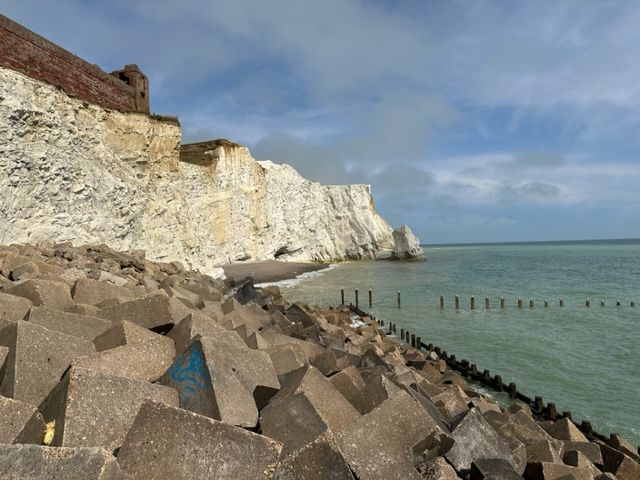
The Kittiwake colony at Splash Point appears smaller than in previous years, with several unused nests visible but was still a joy to visit. Surprisingly the Kittiwakes only started breeding here in 1989. In amongst them were the usual few Fulmars, one pair were definitely in exactly the same spot as in previous years and I dare say the others were too. All the posts in the sea in front of us were occupied by Kittiwakes giving everyone the chance to brush up on their knowledge of the key identification features. A marauding crow caused a raise in volume from the colony as it hopped amongst the birds sitting on their eggs. The first of our many Rock Pipits were seen here in amongst the huge concrete blocks protecting the cliff – it was definitely the bird of the day seen everywhere we went and far outnumbering the Meadow Pipits. A couple of Gannets were seen far out at sea.
Up on Seaford Head there were plenty of small passerines in the hedges seen and heard as we left our cars including Whitethroat, Goldfinch and Chaffinch. Out came the Merlin sound identification apps! Behind South Barn a field of corvids, mainly Rooks, mobbed an unconcerned fox which continued to stroll through the field. Turning right we headed down Hope Bottom stopping frequently to enjoy Song Thrush, Chiffchaff, Dunnock and Greenfinch amongst other things in the sheltered dense bushes which border the path. It is a migrant hot spot in Spring and Autumn with the bushes providing shelter and food. The vegetation is carefully managed to create open areas allowing nectar rich flowers. A pyramidal orchid was one of many flowers seen. In these open areas nearer the clifftop, we were able to compare Rock Pipits with Meadow Pipits as they stood next to each other. Down on the beach, even though the tide was too high to allow us to do any more than stand on the steps, another 3 Rock Pipits were seen, one performing song flights.
After lunch we headed along the cliffs and down to Cuckmere Haven. A Curlew put in a very brief appearance as it flew along the clifftop. Again, Rock Pipits were the main birds but looking over the Cuckmere River at the scrapes opposite and inland down the river and over the meadows on the west we added a few more species: – Grey Heron, 5 Little Egrets, Reed Bunting, Shelduck, Oystercatcher, Canada Geese and a Redshank which was heard but not seen in the long grass. Had it not been high tide they may have been seen on the muddy banks. A Buzzard perched on a distant fence then up to the east 3 more were seen spiralling on thermals. A Kestrel was also seen.
Returning back up the cliffs our party managed to split into 3 groups, some revisiting Hope Bottom. A moment of anxiety was eased when they all eventually joined us back at the South Barn tea kiosk. Some of us returned for the aforementioned second visit to Splash Point with all agreeing that it is a really beautiful spot, whether huge numbers of birds are seen of not, and my favourite trip of the year.
Thanks to new member Roy Pattison for all his expert bird knowledge and big telescope!
by Rebecca Dunne
Species:
Mammals: 3 Bottle-nosed Dolphins, Rabbit, FoxButterflies: Common Blue, Large White, Marbled White, Meadow Brown, Red Admiral, Small Heath, Small Skipper,
Black-backed Gull, Black-headed Gull, Blackbird, Black Cap, Blue Tit, Buzzard, Canada Goose, Carrion Crow, Cetti’s Warbler, Chaffinch, Chiffchaff, Collared Dove, Cormorant, Curlew, Dunnock, Feral Pigeon, Fulmar, Gannet, Goldfinch, Great Tit, Greenfinch, Grey Heron, Guillemot, Herring Gull, House Sparrow, Jackdaw, Kestrel, Kittiwake, Linnet, Little Egret, Magpie, Meadow Pipit, Mute Swan, Oystercatcher, Peregrine, Pied Wagtail, Redshank (h), Reed Bunting, Robin, Rock Pipit, Rook, Sandwich Tern, Shelduck, Skylark, Song Thrush, Starling, Stonechat, Swallow, Swift, Whitethroat, Woodpigeon, Wren