
Devon (23 – 26 January 2024)
Prior to setting off, the weather was looking quite grim but after driving through bands of rain it cleared by the time quite a few of the 31 people booked on the trip got to Exminster Marshes.
Before setting off down the road towards the Canal a couple of Buzzards were spotted flying high. Looking across the fields on either side of the road a lot of Curlew and large flocks of Brent Geese could be seen busily feeding. There were plenty of Wigeon, Shelduck, Teal and a few Pintail on the lakes. A Snipe was seen flying before reaching the Canal. The juvenile Spoonbill reported to be there over the previous few days had, sadly for us, decided to feed elsewhere today.
Walked along to Turf Lock where we could then see onto the Exe Estuary. Avocets, Red Breasted Merganser and Golden Plover were among the birds seen feeding on the mudbanks. A Kingfisher was pointed out by Dan so a few of us were able to watch it fly across the water from the Lock.
Near the Lock, a flock of Greenfinch with Dunnock and Robin flew into the scrub, presumably preparing to roost. Retracing our steps back towards the car park Stonechat were spotted and a Sparrowhawk flew out of the bushes and along the road in front of us.
A good start to our trip.
Wednesday 24
Rebecca was up early and went for a walk in the Langstone Cliff Hotel grounds before breakfast and she was treated to the sounds of a pair of Tawny Owls calling to each other. A few of us stood by the main entrance and could also hear them from a distance just before 7.30am.
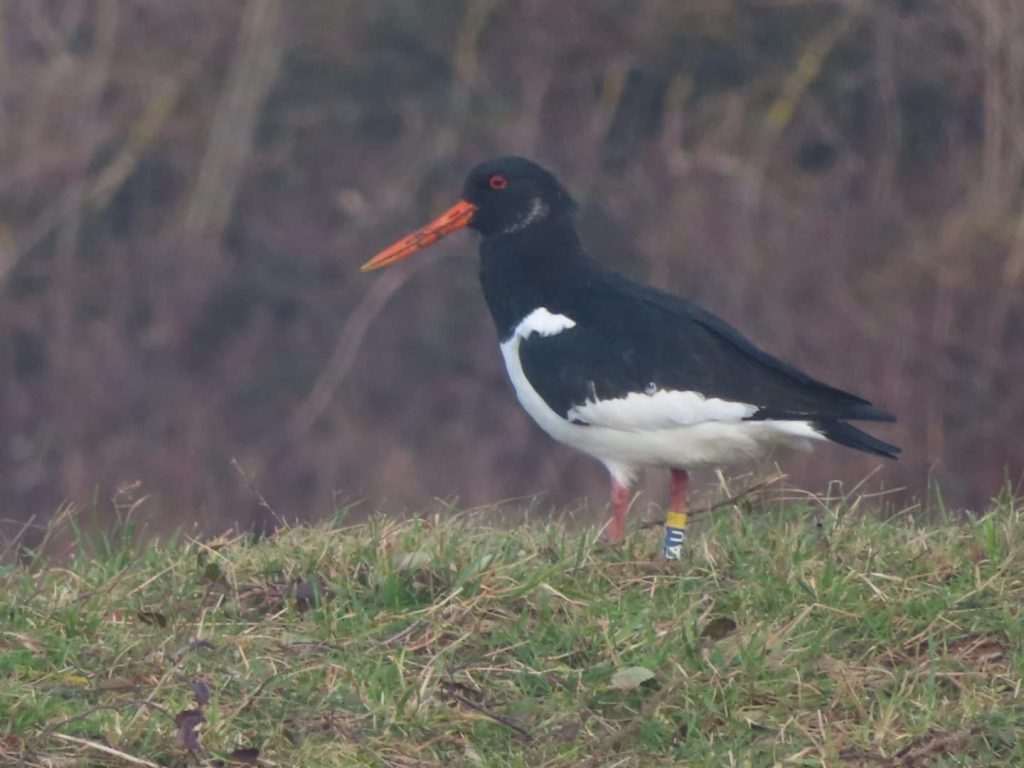
Set off for Dawlish Warren Nature Reserve just after 9am. Woodland birds including Firecrest, Goldcrest and Wren were seen from the path just outside the hotel grounds. Not a lot was visible out at sea apart from Great Crested Grebe. A Grey Heron, Little Egret and an Oystercatcher were on the rocks to the west of the hotel.
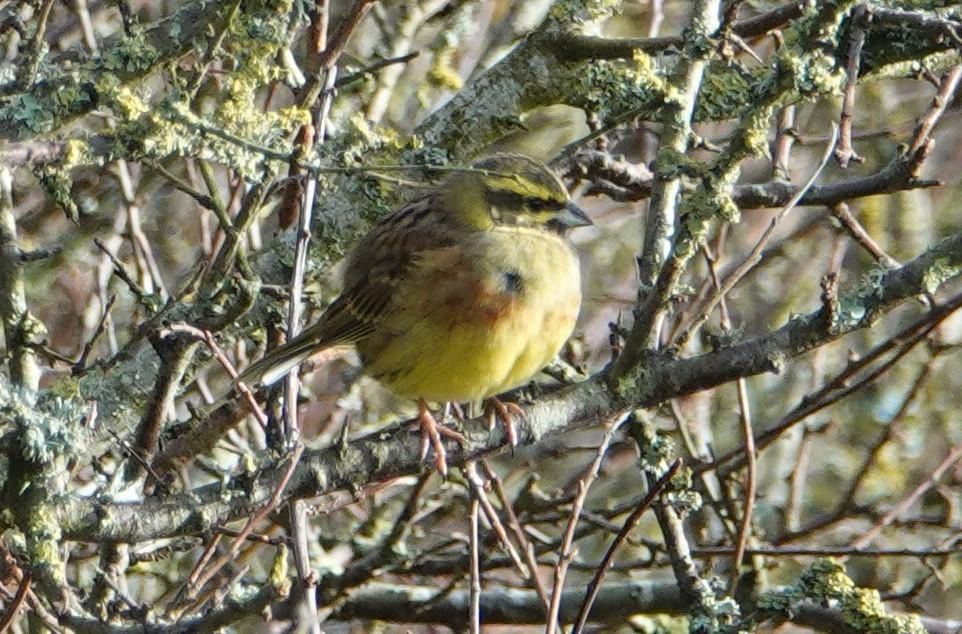
The Reserve came up trumps though as a pair of Cirl Buntings were seen soon after entering. The female was spotted first which caused a lot of checking of Apps and bird books to check and identify. What was it? It was only when the male popped up that the penny dropped that it was a female Cirl Bunting. Several more were seen later so everyone had good views of these special birds which are rare as their distribution range is mainly restricted to South Devon. A few have ventured along the coast into Dorset recently so hopefully numbers are on the increase.
House Sparrows and Stonechat also frequent the Reserve in good numbers and a flock of Oystercatchers were feeding on the grass. A male Bullfinch was also seen by a couple of lucky people. Unfortunately, the sea had washed away some of the dunes so we were unable to get down onto the beach but it was possible to set up scopes and look out to sea from the top of the dunes. Some people sat enjoying the surprisingly warm rays of the sun on their faces. Out at sea there was a Great Northern Diver and further along the beach towards the Estuary there were various Gulls, Black-tailed Godwits, Brent Geese and Eider.
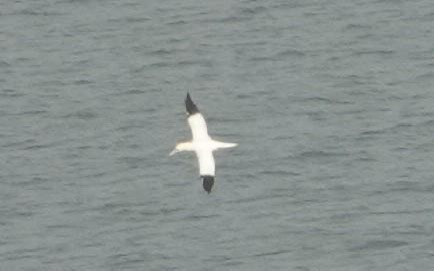
Having seen the Cirl Buntings on Dawlish Warren Nature Reserve, the pressure was off to find them at Labrador Bay! Driving through Teignmouth towards Labrador Bay gave everyone a chance to drive over the River Teign which can have good flocks of waders. Labrador Bay offers wonderful views out to sea and with the sun shining it was lovely. A Guillemot and Great Northern Diver were floating along not far from the shoreline. A Gannet in flight was one of the highlights along with the flock of Cirl Buntings. The Cirl Buntings were elusive until Debbie spotted them feeding a couple of fields away. Those that trekked along, over a stile, and in one case over a gate, were treated to good views of them. A flock of Linnets also flew over.
On the way back to the hotel, a couple of people stopped off at the Egret roost near Starcross. Approximately 50 Cattle and Little Egrets, mainly Cattle, were seen landing high up in the trees, then arguing amongst themselves to secure the best roosting perches
Thursday 25

A half hour drive to Topsham’s RSPB Bowling Green Marsh to start the day. A lovely walk along the path towards the hide with many friendly Dunnock and Robin in the bushes. Bullfinches were posing in the trees by the hide for all to see. Looking across the lake, Shoveler, Mallard and Teal could be seen feeding with a pair of Greylag Geese present too. At least six Snipe were visible on the edge of the lake. Whilst walking to the viewing screen a Great Spotted Woodpecker was seen and heard drumming too. Chaffinch and Greenfinch were also present. A Song Thrush was singing beautifully from the branches of a large tree as we approached Goat Walk.
From both the viewing screen and Goat Walk, Black and Bar-tailed Godwit were seen out on the Estuary along with many Avocet. Turnstone and Redshank were also present in good numbers.
From Topsham we had a short drive to Exmouth harbour to join the 1 o’clock Stuart Line Exe Estuary Birdwatching Cruise. Soon after the beginning of the trip 2 Great Northern Divers were spotted at the mouth of the estuary. As we started to cruise up the river everyone tucked into their pre booked pasties. They were delicious.
Derek, the commentator, pointed out many birds as we cruised along. Eider, Dunlin, Knot, Lapwing, Red-breasted Merganser, Shag, Shelduck, Wigeon and Greenshank were just some of the birds seen. A large flock of Golden Plover rose into the air as the boat cruised towards them. On the return back to Exmouth, a Ruff and Sanderlings added to the birds seen. Two seals were also seen on the trip – one laid up on a mud bank posing for photographers.
Friday 26
Time to make our way home.
Several members of our group popped into Dawlish to look for the Dipper and were treated to good views.
A few people made their way to Seaton Wetlands which is about an hour’s drive from Dawlish Warren. One group went to Seaton Marshes first and were lucky to see a pair of Kingfishers close to the hide.
Later, from the same hide, a Mediterranean Gull was identified from a large flock of Gulls and a Fox was spotted sleeping in the sunshine oblivious to a male Pheasant passing close by.
From the Tower hide, Redshanks and a single Greenshank were seen feeding along the edges of the estuary and a Little Grebe fishing just in front of us.
Walking across Colyford Common several Pipits were flying up and landing on the telegraph wires. Virtually all of them were Rock Pipits. A Bar-headed Goose, no doubt an escapee, was feeding with the Canada Geese in the fields across the tram line. In the distance, a Barn Owl was just about visible from within its nest box.
That was the end of a great few days in a lovely part of the country with 105 species seen/heard.
We were blessed with good weather – hope its similar next time!
By Sandra Hucks