
Normandy and Keyhaven Marshes (5 August 2025)

Seventeen of us assembled at Lymington car park on a sunny, breezy day.
Our first destination was Normandy marsh. The walk took us through the marina and round the reed beds skirting the bay and en route we spotted Reed Warblers flitting in and out of the vegetation and a Kingfisher perched on a post while the first of many Little Egrets poked around in the mud below him.
At the Marsh Lagoon we found a further very active Kingfisher posing nicely for us in between flights. Common Terns were noted, and to our delight an omniscience* of Black-tailed Godwits flew in identifying themselves with their distinct white wing bars as they settled among the mud flats joining Greenshank, Redshank, two Ringed Plovers, Little and Great Crested Grebes, Shelduck, a single Dunlin and, slightly surprisingly, a Wheatear. On the seaward side of the wall two Black Swans were seen.
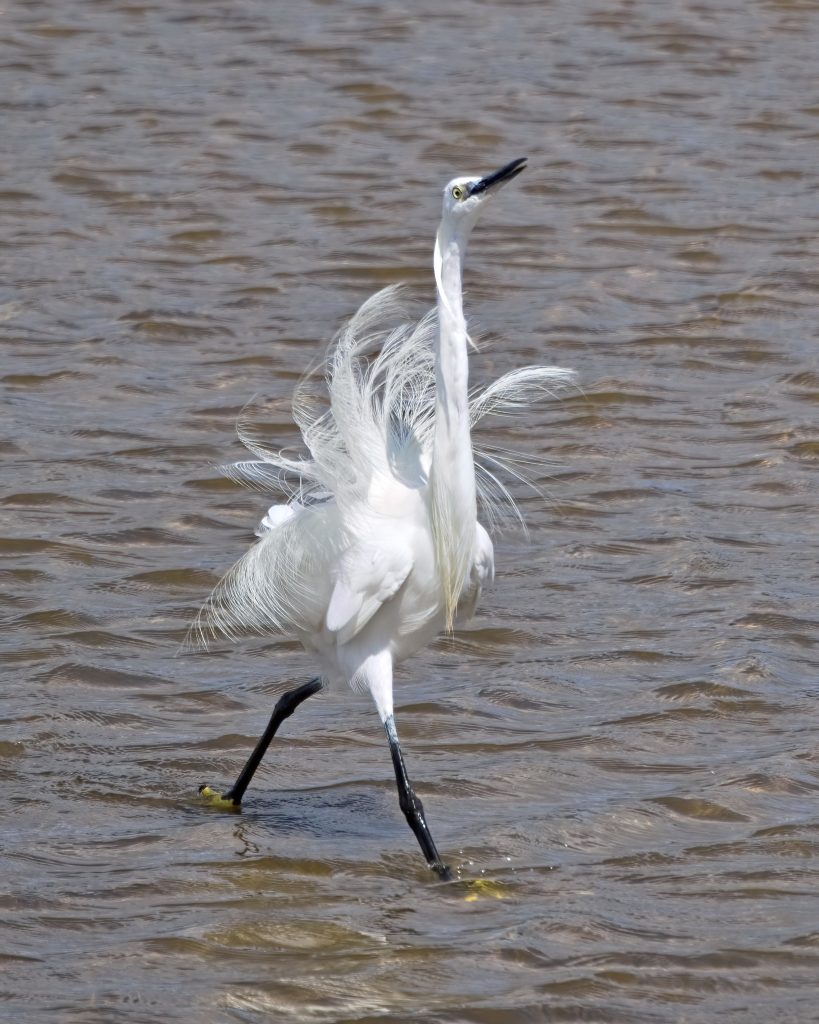
Returning back to the car park we ate our sandwiches (and an ice cream or two) sitting on the sea wall, before driving round to the other end of the Nature Reserve and exploring the Keyhaven Marsh. Here we finally found the Eider Ducks we had been looking for all day, at first very distantly, but later much closer to the shore allowing us some excellent photographic opportunities. Other star attractions included a Whimbrel, Curlews and Grey Plovers – two still in full breeding plumage and one having turned into non-breeding colours. At Fishtail Lagoon we encountered an Avocet family, and watched the parents frantically dive bombing an unwanted Grey Heron to protect their chick. A Little Ringed Plover poked around at the lagoon’s edge, oblivious to the drama unfolding behind it. On the seaward side we were enchanted by close up views of a large number of Turnstones, demonstrating their name as they searched for food under the pebbles.
We returned via the ancient highway path in very warm sunshine. The birdlife was quieter here, but we did observe some smaller, non-wading birds including Linnet, Whitethroat and Meadow Pipit.
We finished the day in the pub garden at The Gun, enjoying a well-earned cold drink as Swallows swooped acrobatically above us.
Many thanks, as ever, to Rebecca for organising the latest visit to this beautiful place which never fails to delight our Group. We will return in October.
by Julia Keddie
*Yes, that really is a collective noun for godwits. Quite why they are considered omniscient is beyond me. Alternative nouns are a prayer or pantheon.
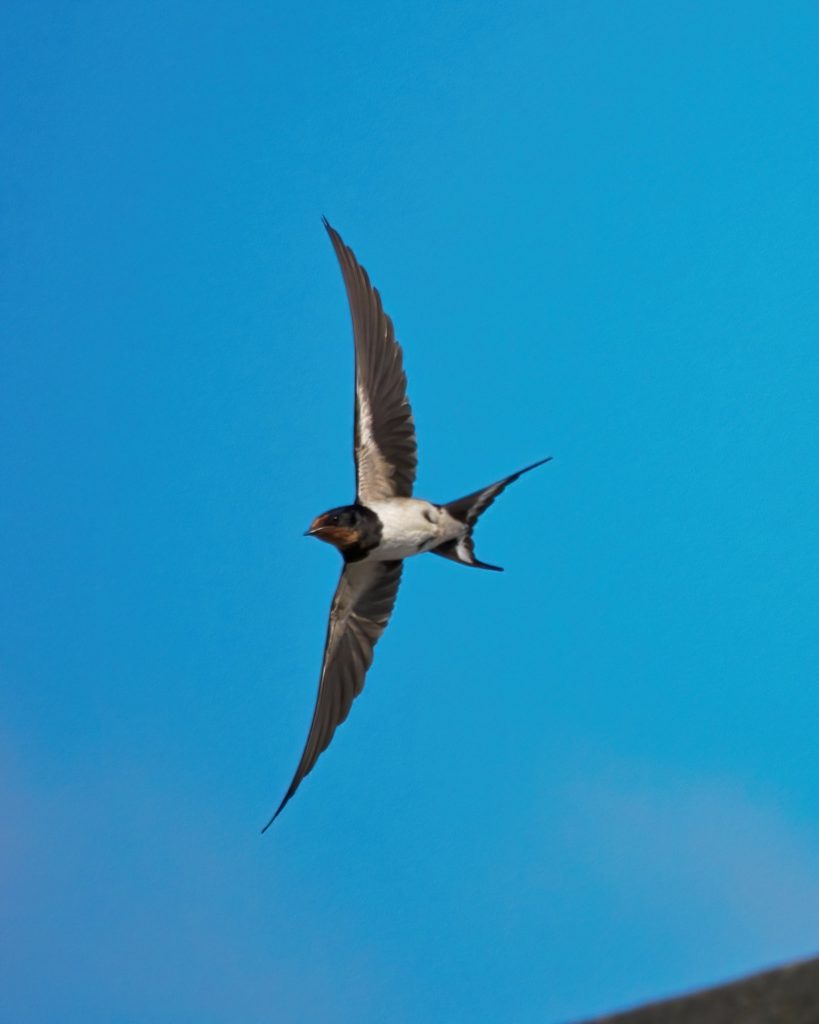
Species (Normandy Marsh): Black Swan, Black-headed Gull, Blac-tailed Godwit, Canada Goose, Carrion Crow, Common Tern, Cormorant, Curlew, Dunlin, Feral Pigeon, Great Black-backed Gull, Great Crested Grebe, Greenfinch, Greenshank, Herring Gull, Kingfisher, Lapwing, Linnet, Little Egret, Little Grebe, Magpie, Mallard, Meadow Pipit, Oystercatcher, Pied Wagtail, Redshank, Reed Warbler, Ringed Plover, Sand Martin, Shelduck, Skylark, Starling, Swallow, Turnstone, Wheatear
(Keyhaven Marsh): Avocet, Black-headed Gull, Black-tailed Godwit, Blackbird, Blue Tit, Buzzard, Canada Goose, Carrion Crow, Clouded Yellow Butterfly, Collared Dove, Comon Tern, Coot, Cormorant, Curlew, Dunnock, Eider Duck, Goldfinch, Great Black-backed Gull, Great Crested Grebe, Great Tit, Greenfinch, Greenshank, Grey Heron, Grey Plover, Herring Gull, Hobby, House Sparrow, Lapwing, Linnet, Little Egret, Little Grebe, Little Ringed Plover, Magpie, Mallard, Meadow Pipit, Moorhen, Mute Swan, Oystercatcher, Pied Wagtail, Redshank, Robin, Rook, Shelduck, Sparrowhawk, Starling, Stock Dove, Stonechat, Swallow, Turnstone, Whimbrel, Whitethroat, Wood Pigeon