
Seaton Wetlands – 23rd August 2026
It was a lovely sunny morning for our visit to Seaton Wetlands, so there was a big turnout – twenty of us met in the car park. Steve decided that we should split into two groups to avoid overcrowding the hides. Steve’s half of the group started at Colyford Common, and then gradually retraced their steps southwards. Meanwhile Jonathan’s group started off at Tower Hide and worked their way northwards. I was in Steve’s half of the group, so this report is mainly about what we saw.
Setting out from the car park, we couldn’t resist a brief stop to have a look over Black Hole Marsh from the Lookout. Although the sun was in our eyes, we could pick out good numbers of Black-tailed Godwits, Redshanks, Lapwings and Black-headed Gulls, plus a Shelduck and a Grey Heron. Then, on to the artificial Sand Martin nest bank. Many of the Sand Martins had finished their breeding, but there were still quite a few birds coming and going. Apparently, over 700 chicks have been raised there this season!
We then made our way across the Stafford Brook, through the little wood and into Colyford Common. We were pleased to see a Cattle Egret appropriately with the grazing Red Devon cattle. A nice group of Rooks and Jackdaws were in the nearby trees, and Stonechats perched up on brambles. From the Colyford Common hide, we saw a few more egrets – this time Little Egrets – along with a large group of Curlew.
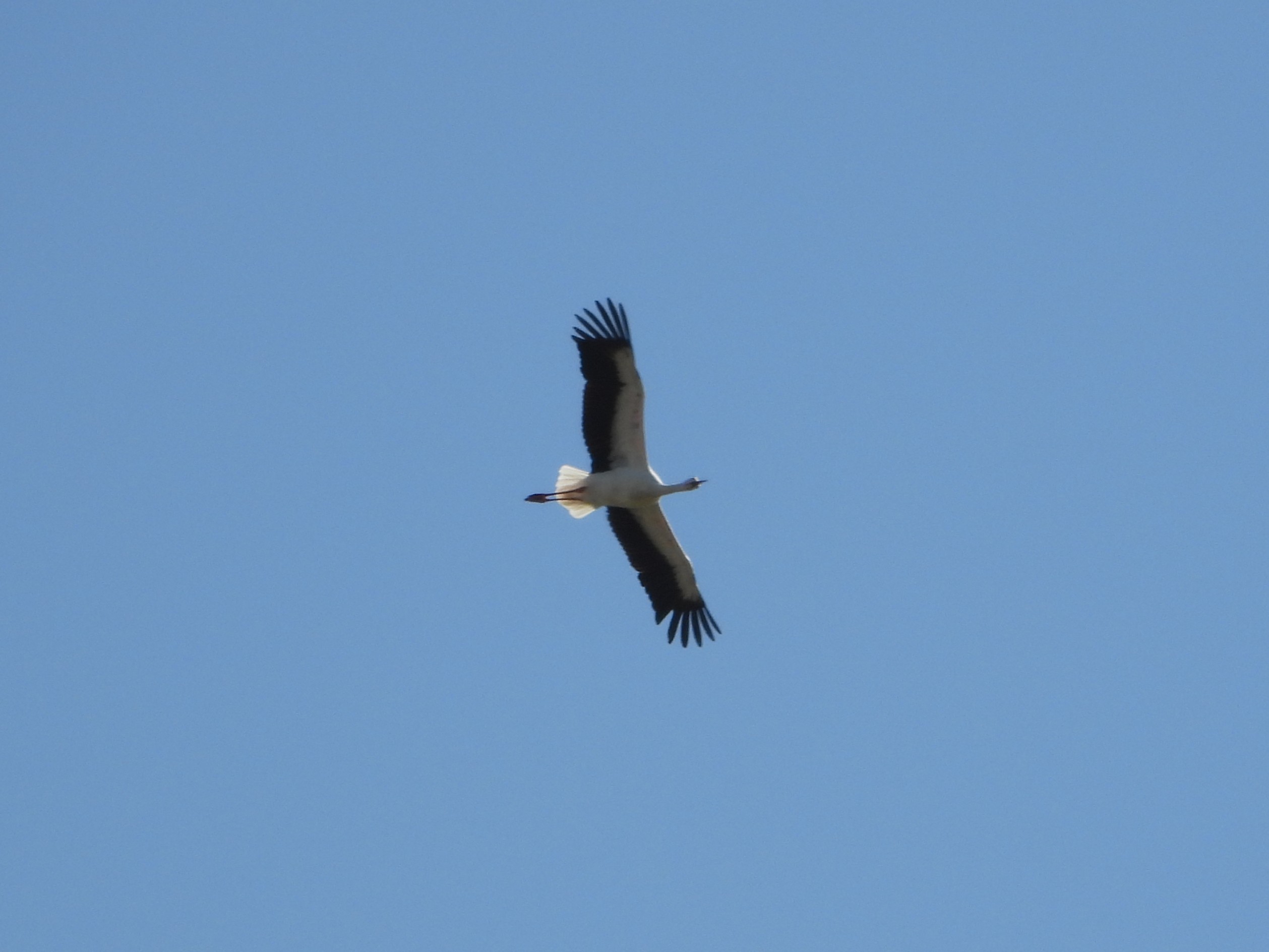
Then it was time to head back to Black Hole Marsh. En route, we encountered Jonathan’s group who reported that they had seen a Wood Sandpiper from the Island Hide. Sadly, by the time we had got there, we couldn’t see it at all! However, we did find Greenshank and a few Dunlins before heading off to the Tower Hide. We had stopped for a while at the viewpoint near the reserve entrance then suddenly we noticed all the gulls had taken off. Anticipating that they might have been disturbed by an Osprey, we had a look to see what had upset them. It was a White Stork, flying high over the river! Presumably from a reintroduction project, although we couldn’t see any ring.
We spent a while at the Tower Hide, getting good views of a group of Ringed Plover, and a distant sighting of a Common Sandpiper on the opposite shore of the estuary. Looking over the marsh, we managed to pick out a distant Spotted Redshank to add to our list. Lunch was calling, but we decided to call in again at the Island Hide on the way to our picnic. One of the birders there had re-found the Wood Sandpiper, and I got a brief view before it disappeared behind some vegetation.
Most of us gathered to have our sandwiches near the Discovery Hut. We learnt that Jonathan’s group had enjoyed a little impromptu ringing demonstration as well as extended views of the Wood Sandpiper during their walk – but they had missed the stork! You win some, you lose some. Thank you very much to Steve and Jonathan for leading a very pleasant morning’s walk.
Richard Swinbank
57 Species identified (H – heard only):
Canada Goose, Mute Swan, Shelduck, Mallard, Teal, Pheasant, Feral Pigeon, Stock Dove, Woodpigeon, Moorhen, Oystercatcher, Ringed Plover, Lapwing, Curlew, Black-tailed Godwit, Common Sandpiper, Wood Sandpiper, Redshank, Spotted Redshank, Greenshank, Dunlin, Black-headed Gull, Herring Gull, Great Black-backed Gull, Lesser Black-backed Gull, White Stork, Cormorant, Little Egret, Great White Egret, Cattle Egret, Grey Heron, Buzzard, Kingfisher, Great Spotted Woodpecker, Kestrel, Peregrine, Jackdaw, Rook, Carrion Crow, Raven, Magpie, Blue Tit, Great Tit, Sand Martin, Swallow, Cetti’s Warbler (H), Chiffchaff, Blackcap (H), Reed Warbler, Blackbird, Robin, Stonechat, House Sparrow, Wren (H), Dunnock, Greenfinch, Goldfinch.