Dawlish Warren, 9th September 2026
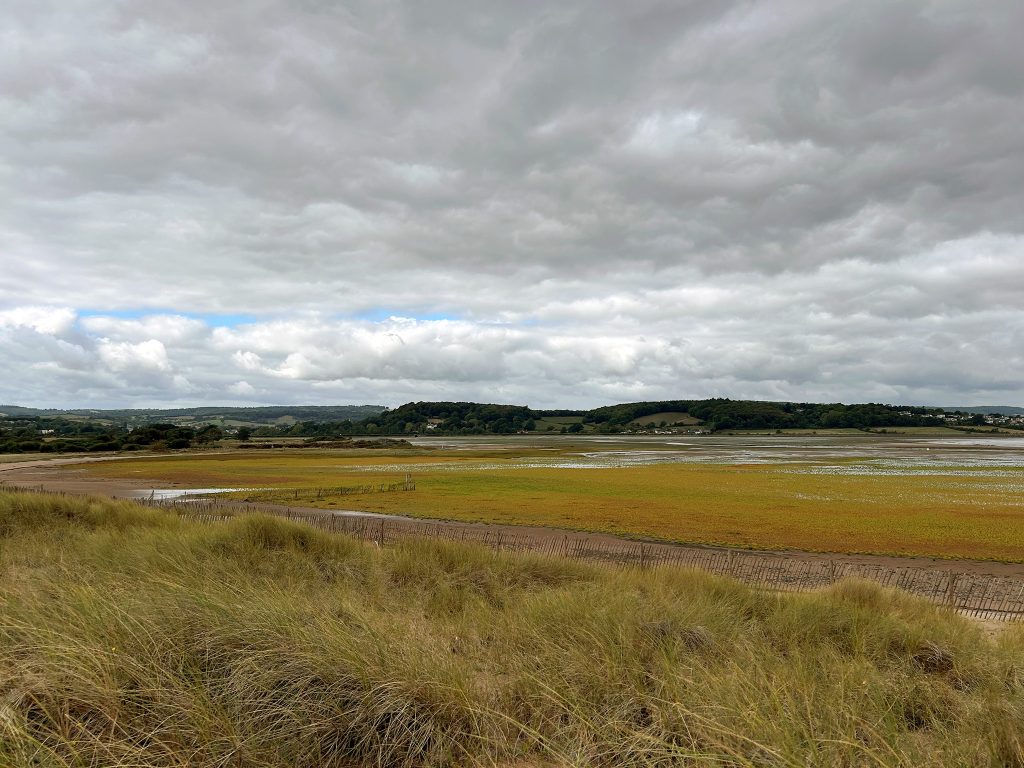
On an overcast but dry Wednesday morning, we met for a walk at Dawlish Warren National Nature Reserve. This reserve is designated an SSSI and a Special Area of Conservation (SAC) for the sand dune grassland area. Approximately 2000 type of invertebrates are found, 600 plant types and around 180 bird species recorded each year. A very important land and sea scape. More details about the reserve can be found on the Teignbridge Nature Reserves webpage.
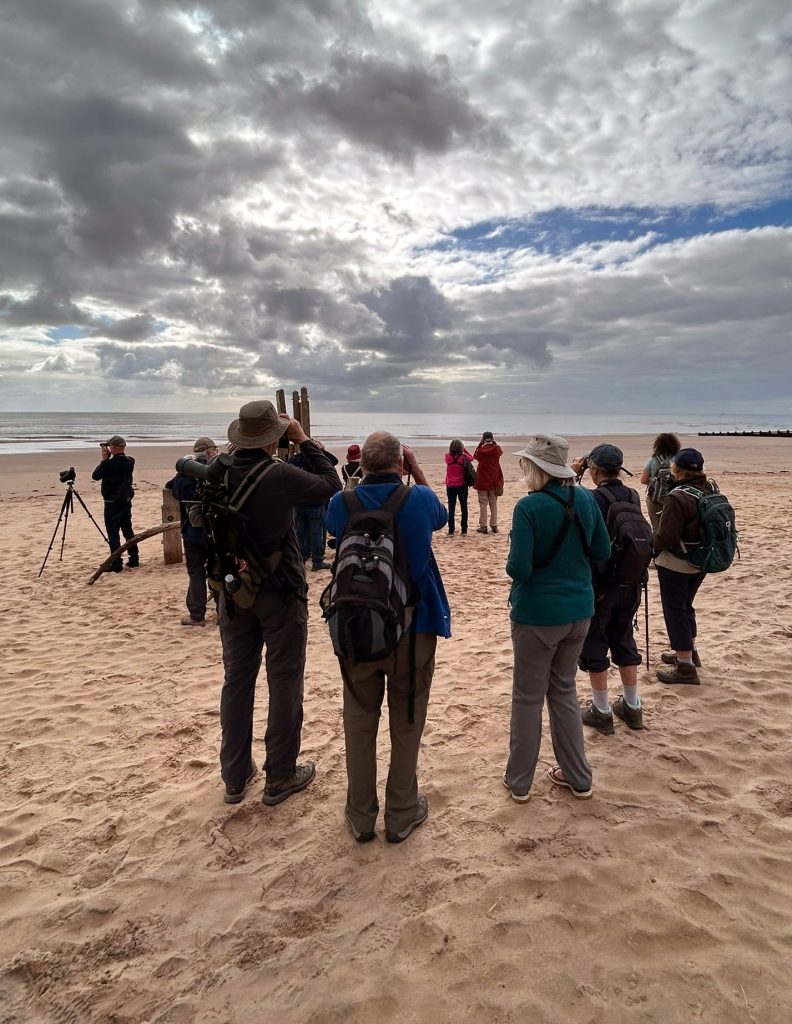
We set off from the car park along the main path that runs between the Golf Course on the left, and the sand dunes on the right. In the gorse and brambles on either side of the path, normally you would expect to see many birds foraging around, but apart for small groups of House Sparrows, the bushes were rather empty. Overhead Herring Gulls were flying, along with Carrion Crows, the odd Magpie and a good number of Swallows feeding before they head off for the Winter. The distinctive call of a Raven could be heard, and several of the group saw it flying overhead.
As the area opened into more grassland, there seemed to the Stonechat all around, and doing that thing they just love to do – sitting proud and tall on top of a bush. There were small flocks of Linnet flying around, also competing for the best bush to perch on. A couple of Buzzards soaring overhead, while Starlings practiced formation flying in readiness for murmuration season.
Climbing over the dunes, we reached the beach area and the shoreline. Walking down the beach, there were Oystercatchers and more Herring Gulls hunting for morsels of food. The biggest treat was watching Sandwich Tern diving from a great height and hitting the water with a big splash. The water looked so shallow where they were diving, and it is remarkable they didn’t hit their heads on the bottom each time. But maybe they did, and that is why they have flat heads! A solitary Turnstone was happily standing on a timber cross member of one of the groynes. Maybe it was feeding on the molluscs that live on the timber.
We then walked back onto the dunes and headed to the headland. On the vast mudflat bay area, a Kestrel was sitting on an old fence post. There were also lots of birds hidden in the mudflat plants that kept taking off and quickly landing. The consensus was that these were Linnet. A flock of Dunlin flew around and around the bay, before finding somewhere suitable to land. In the far distance and only clearly visible with a scope, there were Redshank, Grey Heron and Little Egret.
On the headland that looks towards Exmouth, there were more Oystercatchers, Turnstone, Grey Heron and Little Egret. At one point, a boat from the Stuart Line Cruises passed by close to the shoreline, giving those on board a close look at the birds we were watching (We have a boat cruise with Stuart Line planned for 22nd January 2027 – see the event listing for more details). On the sandbanks in the estuary were Curlew, Great Black-backed Gulls, Black-headed Gulls and Cormorant.
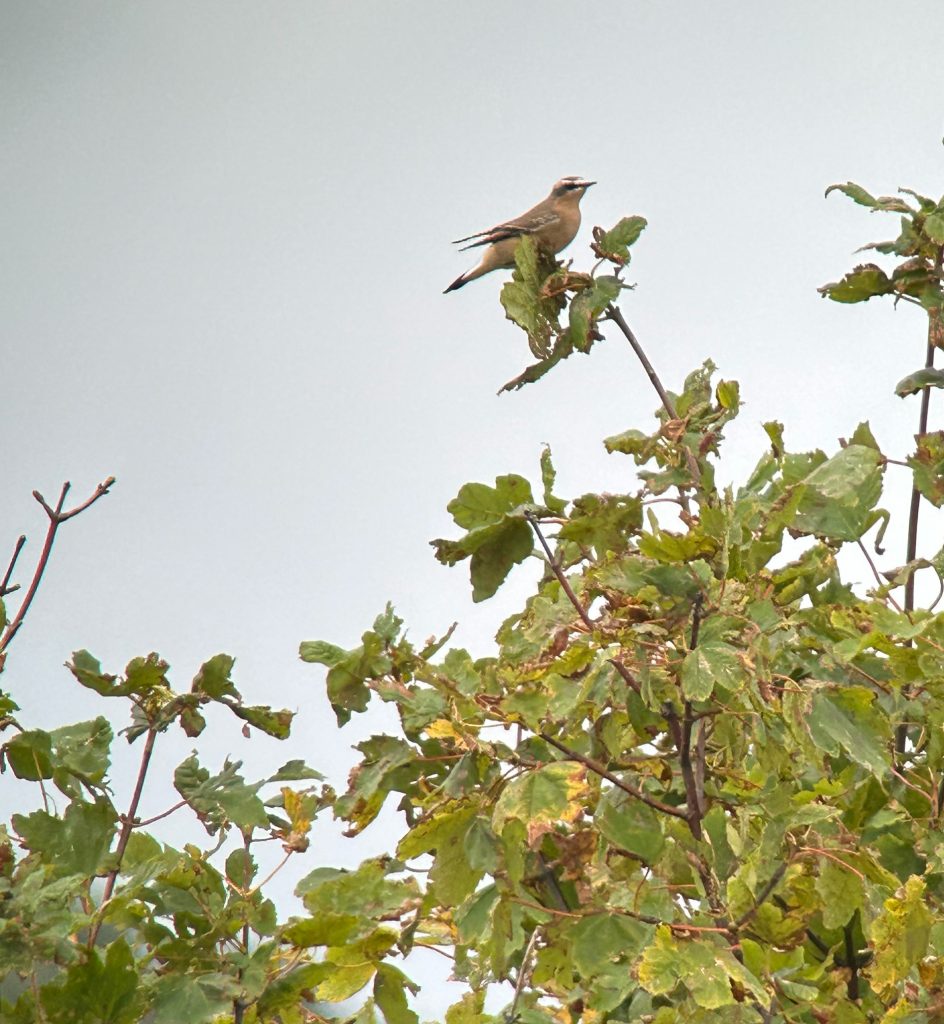
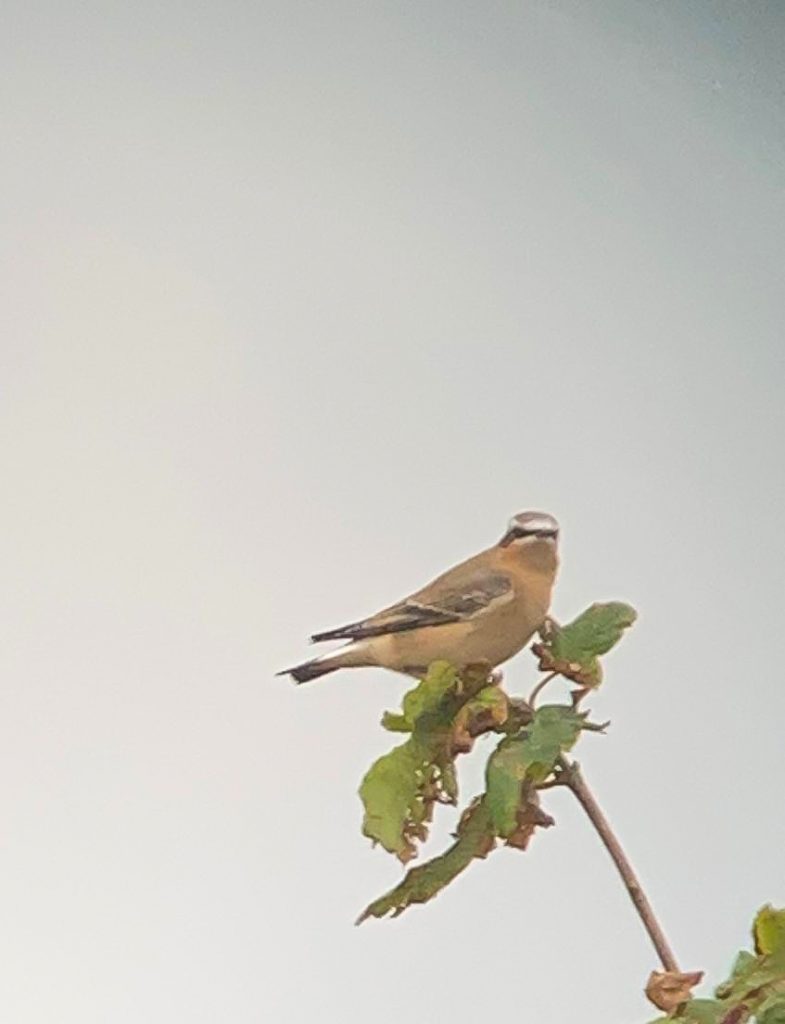
It was now time to head back to the car park. I was in the tail-end of the group, and out of the corner of my eye I saw something with a striking white rear fly by. It could only be one thing, a Wheatear. Those few stragglers of the group were treated to good views of both a male and female birds. While this was happening, the front runners were watching Greenfinch.
On the way back, we saw Robins, a Mallard, Moorhen on the small lake and a quick fly past of a Great Spotted Woodpecker.
All in all, it was a very enjoyable morning walk, and the weather was kind to us. I would like to thank Steve for leading the walk, and Deborah for being co-leader.
Jonathan Pearce
37 species identified (H – heard only)
Mallard, Woodpigeon, Moorhen, Oystercatcher, Ringed Plover, Curlew, Redshank, Greenshank, Turnstone, Dunlin, Sandwich Tern, Black-headed Gull, Herring Gull, Great Black-backed Gull, Cormorant, Little Egret, Grey Heron, Buzzard, Great Spotted Woodpecker, Green Woodpecker, Kestrel, Magpie, Carrion Crow, Raven, Blue Tit, Swallow, Whitethroat, Wren (H), Starling, Blackbird, Stonechat, Wheatear, House Sparrow, Dunnock, Pied Wagtail, Greenfinch, Linnet.