
A Bird for All Seasons: Season of Mists
(by Robert McDowell, 23 October 2026)
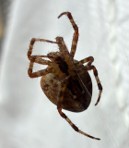
With the drop in daytime temperature and the condensation on windows it is obvious that we are now on the cusp between summer and autumn. The dew on the grass sparkles in the sunlight and the Garden Spiders’ webs in the hedgerows glisten like exotic filigree jewellery. The leaves, cast by their hosts, crackle underfoot. Horse chestnuts are already in abundance, as we come into “conker” season.
The summer migrants – Swallows, Swifts and warblers – have left us for warmer climes and they are already being replaced by flocks of geese arriving from the northern frozen tundra. We will soon hear the contact calls of flocks of Redwings overhead during the hours of darkness.
Lughnasa is a Gaelic festival marking the beginning of the harvest season, and is one of the four pagan festivals marking the changes of the seasons. It was traditionally celebrated by feasting, baking bread and making offerings to the gods. This tradition has been adopted by the Christian churches with their harvest celebrations, when produce is displayed during services.
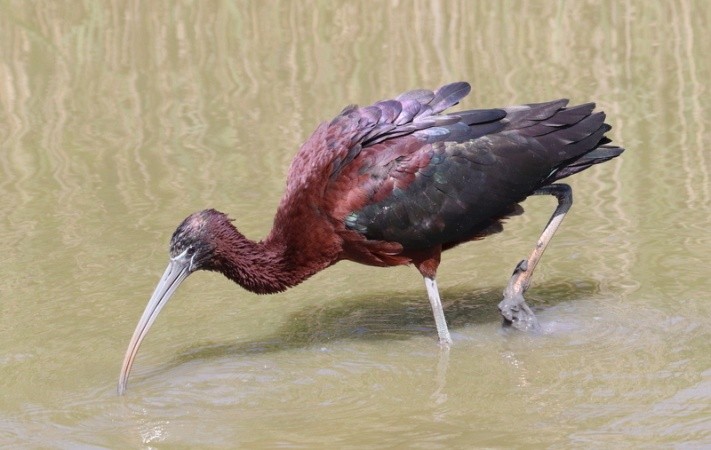
At this time of year, as well as the expected migrants, there are usually some surprise visitors to our shores. Recent arrivals include: Baird’s Sandpiper; Yellow-browed Warbler; Lesser Yellowlegs; Buff-bellied Pipit; Grey Phalarope; Glossy Ibis and Lesser Whitethroat. These rarities are providing a bonanza for “twitchers”, those who seem to have unlimited time and money to pursue these exotic visitors so they can tick them off a list. I am happy to look for rarities in my own location but I draw a line at travelling great distances just to add a species to my life list.
Those birds which remain with us in the vicinity of our gardens will soon find it more difficult to find natural food. It is therefore important that we lend a helping hand by stocking our bird feeders, keeping them clean to prevent the spread of disease. Starting to feed garden birds creates a commitment to continue feeding them through the harshest months. When birds become accustomed to finding food in a garden they will hang around each day expecting to be able to feed. [Editor: be sure to check the RSPB’s latest guidance for safely feeding garden birds!]
My preferences for feeding garden birds are sunflower hearts, fat balls (not the netted variety, as these are dangerous to birds), nyger seed and a proprietary mixture of seeds which leaves no mess, as it is all consumed. I will soon be putting out my feeders and looking forward to welcoming my usual visitors, with perhaps a more exotic guest such as a Brambling or perhaps even some Waxwings, both of which have turned up in my garden in the past.
I was intrigued to hear a Mistle Thrush continuously scolding from an overhead wire. Ten minutes later, it was still there, still very vocal, and I suspected a potential predator was nearby. The mystery was solved when a Starling happened to fly past.
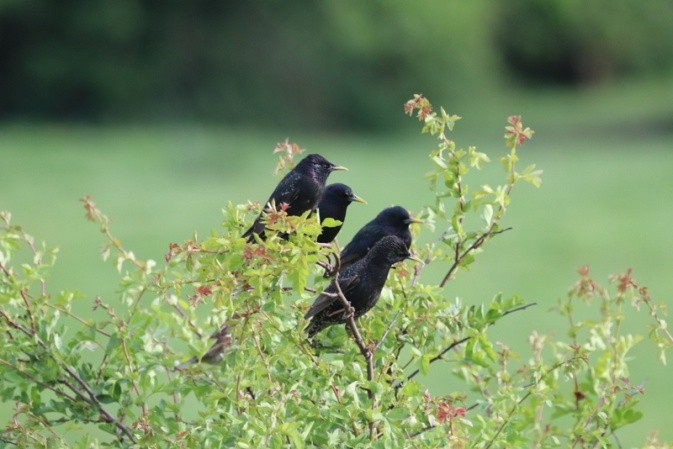
As the Starling passed, a figure streaked in pursuit from the hedgerow. It was a Sparrowhawk. As it set off, the Mistle Thrush followed closely, still scolding. Whether the Sparrowhawk, a male, caught its quarry I do not know, but it was a fascinating chase. Males are approximately one third smaller than females, and, as such, it would not have been a threat to the Mistle Thrush, which is around the same size. Males can take prey up to Blackbird or Starling size, whereas a female Sparrowhawk would be a different proposition, as it would be capable of overpowering a Mistle Thrush.