
Group Outing – St Cyrus
The weather did not look very promising as I headed south from Aberdeen through the thick coastal haar wondering if we were going to see anything at all. However, as I reached St Cyrus it brightened up and by the time 20 of our stalwarts and two new members turned up at the centre, it was bright if a little bit hazy. Initially I thought that we were in for a record-breaking turnout with all the people wandering about, but when a lady from the Centre came rushing out to meet us, it became apparent there was another event planned for that day. It turned out she was hosting a geology event which appeared to be well attended and I heard feedback that it was an excellent presentation by her and her fellow presenters. Geology must be an easy hobby because stones stay still and the keep the same colour all year round, unlike birds.
We started the walk by heading for the beach and things did not bode well. It was very quiet apart from the squadrons of swallows stoking up on calories before their journey south to warmer climes.
On the beach there was a dearth of waders with oystercatchers, curlews and a lone bar tailed godwit. The few waders were joined by black headed, herring and greater black backed gulls patrolling the shoreline. A cormorant was seen but it had eyes bigger than its belly as it struggled to get a large flatfish over its throat. Rafts of common scoters and red breasted mergansers on the sea provided good views. A couple of distant divers were spotted. We moved further north to get closer views and were able to confirm that we had red throated and a black throated diver.
Journeying back along the paths below the cliffs we had stunning views of a peregrine which swooped along the cliff face and perched on an area of fresh-looking greenery allowing us to get the telescopes trained on it for a good fifteen minutes. Our views were interrupted by the kronking of a couple of passing ravens.


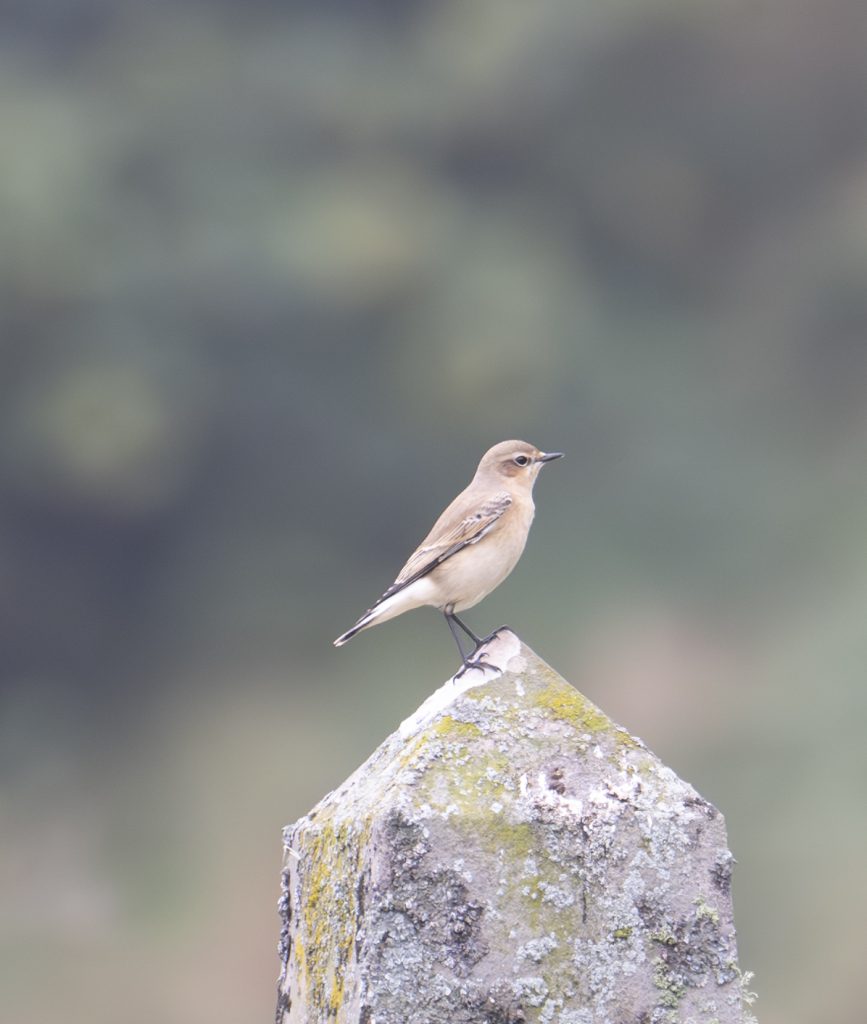
Nearer the car park we stopped at the old churchyard where there was lots of activity from some smaller passerines. We spotted a wheatear, willow warblers, stonechats, chiffchaff and dunnocks. There was also a fleeting glimpse of a spotted flycatcher on the bracken beside the path

After a lunch break at the car park some of the original 22 carried on to the mouth of the North Esk where Canada geese, grey heron, wigeon, teal and goosander were added to the day list. Again, there was a lack of many waders but as compensation we did manage to see a couple of dolphins offshore but fairly close in.
As we retreated to the car park the haar started to come back in, the temperature dropped, and we undoubtedly had had the best of the day. A total of fifty five species was seen.
Thanks to all who attended and helped spot the birds.